Booking choice: The sea caves and Molokini run, 5.5 hours from Kihei Boat Ramp. Book this Compare the options below
Molokini is the reason most snorkel boats leave South Maui before breakfast. It is small, it is protected, and the water inside the crescent is famously clear.
This guide covers what the crater is, how deep it is where you snorkel, what the reserve rules forbid, what lives there, and the stories behind the name. For choosing a boat, see the Molokini snorkel tours guide.
The quick answer
Molokini is the southern rim of an extinct volcanic crater, sitting about 3 miles off Maui's southwestern coast in the 'Alalakeiki Channel. You can only snorkel it from a boat, landing on the islet is prohibited, and the inner cove is where boats tie up. Expect fish and clear water; turtles are uncommon there, and whitetip reef sharks are sometimes seen near the bottom.
What is Molokini Crater?
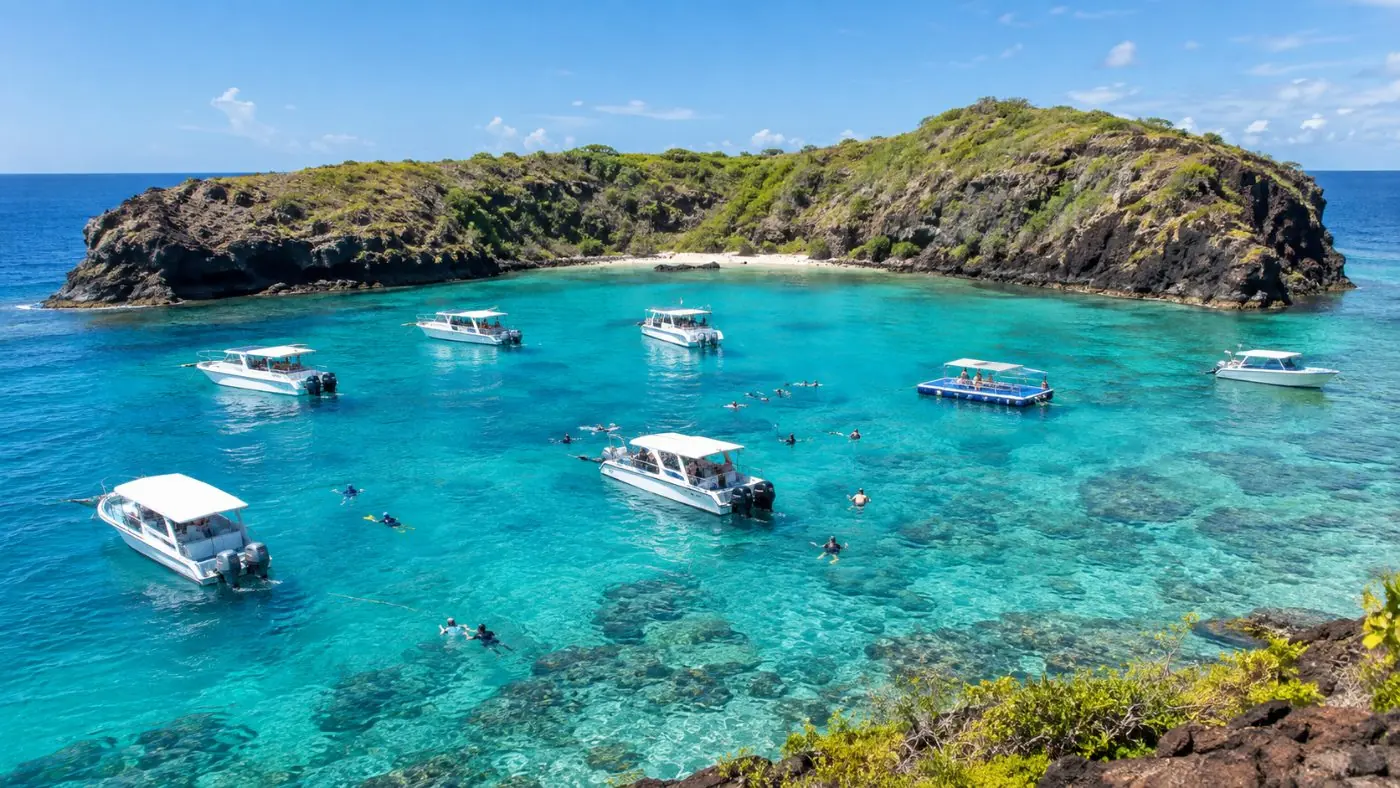
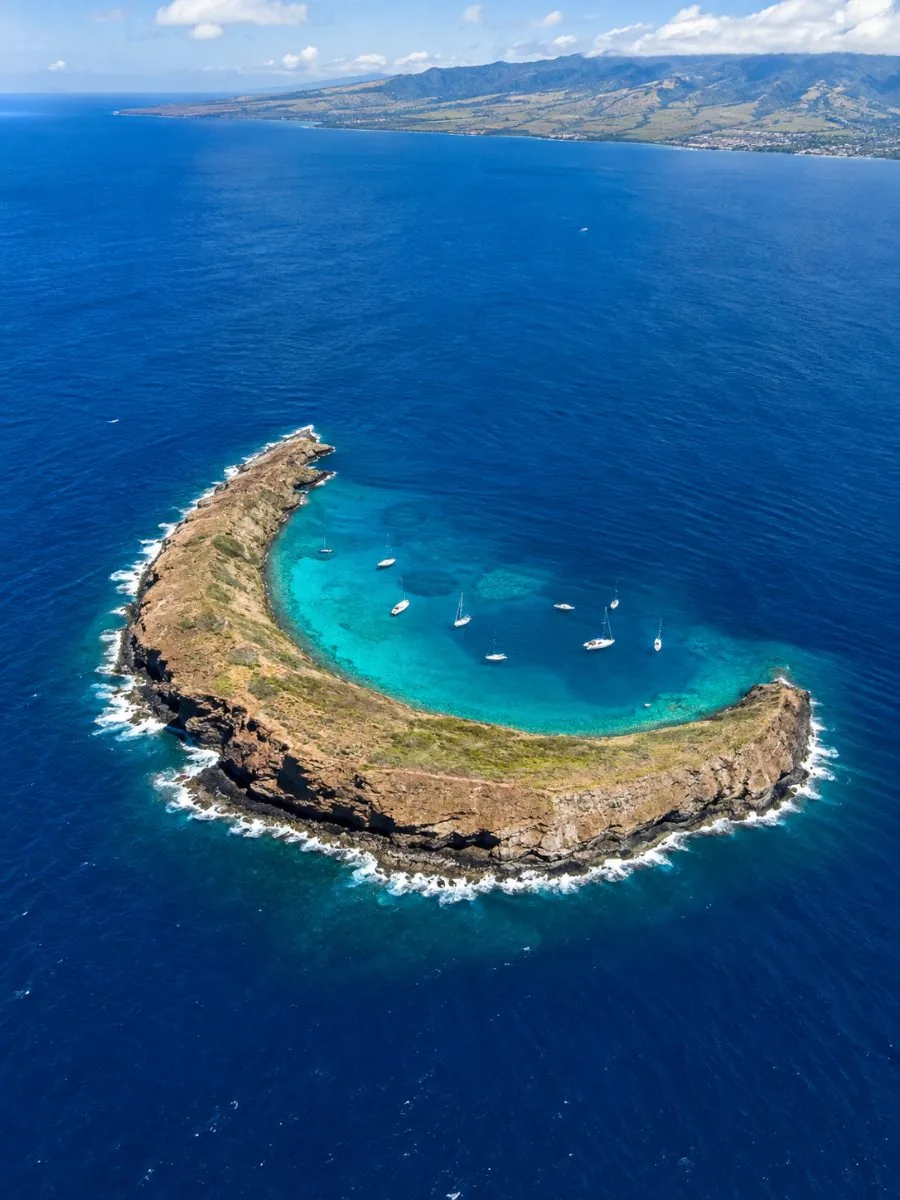
A crescent-shaped islet that is the surviving southern rim of an extinct volcanic crater, with the crater floor submerged in the cove inside it.
The islet covers about 23 acres, rises about 161 feet above the sea and is roughly 0.4 miles across. It lies about 2.5 miles west of Makena State Park, and the eruption that built it is dated to about 230,000 years ago.
The open side of the crescent faces Maui, and that inner bay is where the snorkel boats moor. The outer side, the back wall, faces the open channel.
Is it possible to go snorkeling at Molokini Crater?
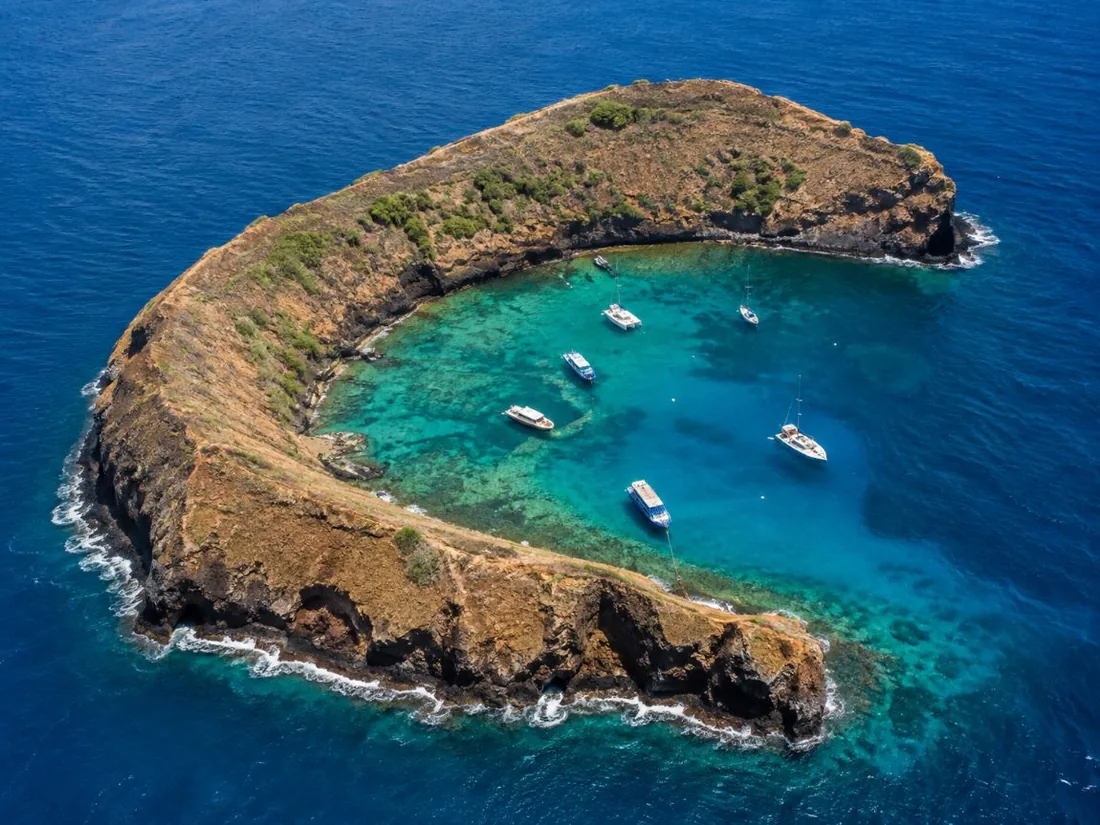
Yes. Snorkeling from a boat moored in the inner cove is the usual way to visit, and charters leave from Ma'alaea Harbor and the Kihei Boat Ramp.
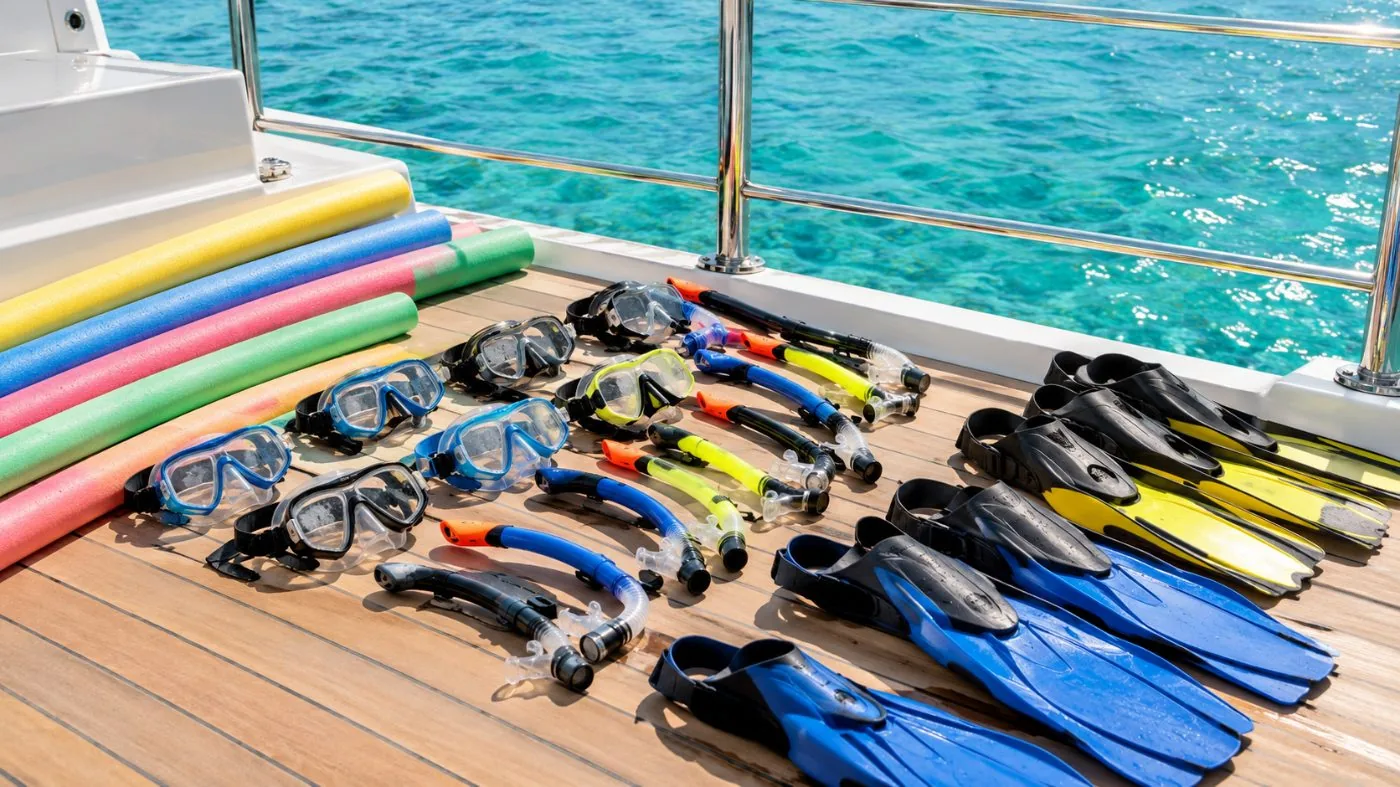
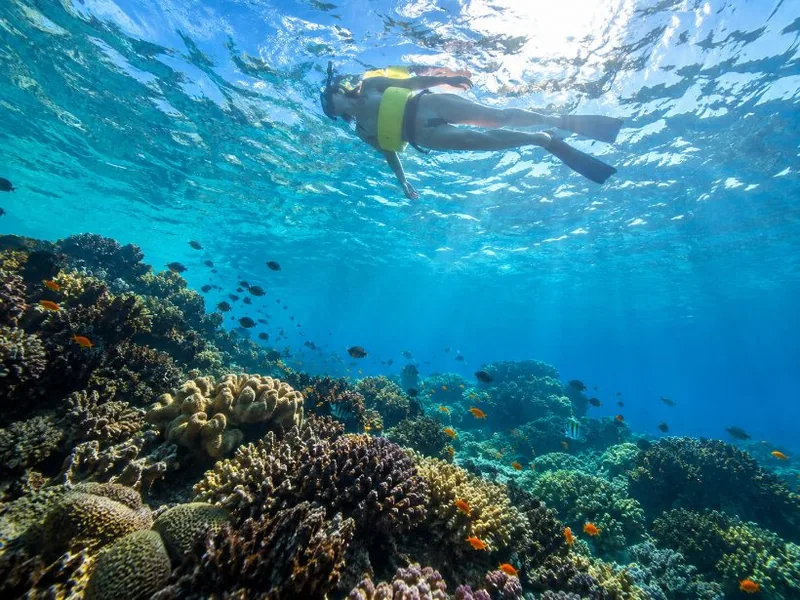
There are no facilities on or at the islet, so the boat is your base for gear, shade and food. Snorkel gear and flotation are provided on every trip listed on this site.
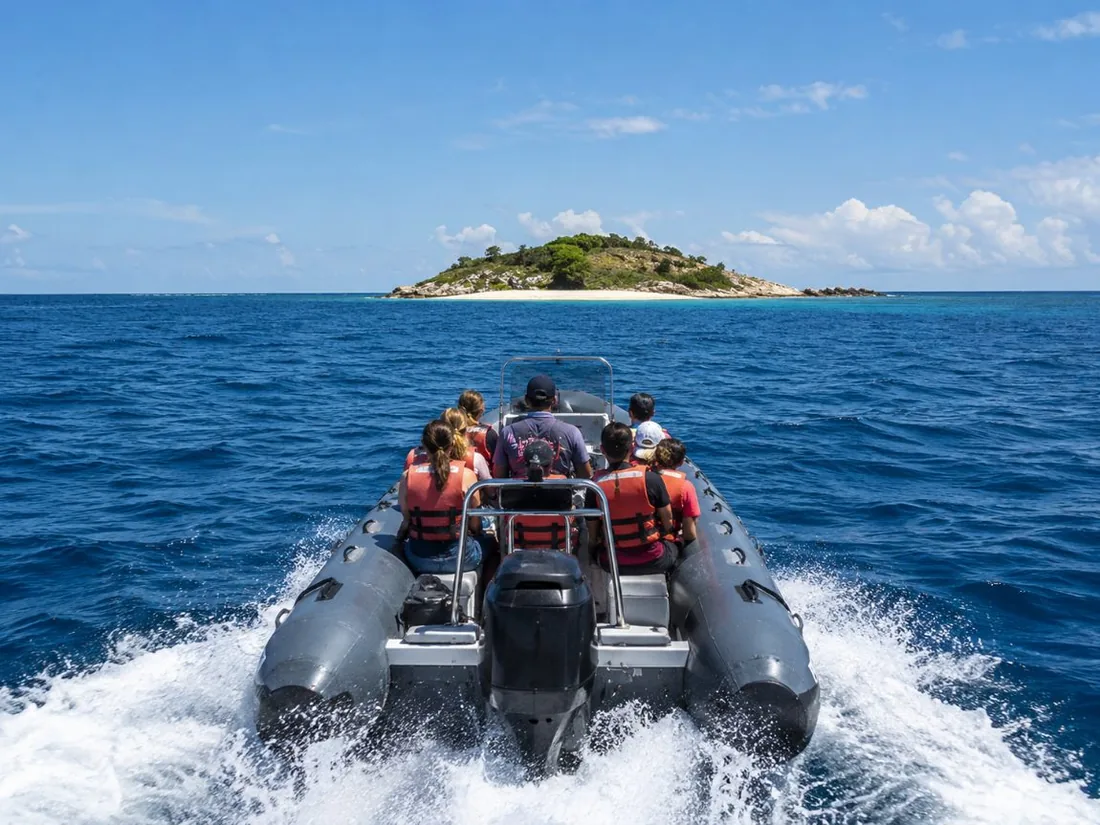
From Kihei the raft operators describe a ride of about 15 minutes; from Ma'alaea the ride is commonly described as about an hour. Ma'alaea or Kihei explains the trade-off.
Want the crater and nothing else? The two-hour trip from Kihei goes straight to Molokini, weather permitting.
Book thisHow deep is snorkeling at Molokini Crater?
Where the boats moor, the snorkel spots are commonly described as roughly 20 to 50 feet deep, with some areas shallower, so in clear water you can see the bottom from the surface.
According to the state, the cove slopes to about 100 feet before dropping further, and the back wall drops steeply to depths beyond 200 feet. Snorkelers float on the surface, so the depth matters mostly for how far down you can see.
| Part of the crater | Depth as described | Who it suits |
|---|---|---|
| Inner cove snorkel spots | Roughly 20 to 50 feet, some shallower | Snorkelers, beginners with flotation |
| Inner cove further out | Slopes to about 100 feet, then deeper | Divers |
| Back wall | Beyond 200 feet | Divers, on calm days |
What is prohibited in the Molokini marine reserve?
Molokini Shoal has been a Marine Life Conservation District since 1977, and the state prohibits taking marine life, removing sand, coral or rocks, and feeding fish.
The reserve covers about 77 acres. The state rules also restrict mooring and anchoring: commercial boats need a permit, and anchoring is not allowed where day-use moorings exist. Fishing is prohibited, with an exception for trolling in one subzone. The state has also proposed tighter limits on how long boats may use the day-use moorings, so expect the rules to keep protecting the crater rather than loosen.
For you as a snorkeler, that means look but take nothing home, keep fish food off the boat, and enjoy the islet from the water.
The islet itself is a state seabird sanctuary, home to birds such as wedge-tailed shearwaters and Bulwer's petrels, and landing on it is prohibited.
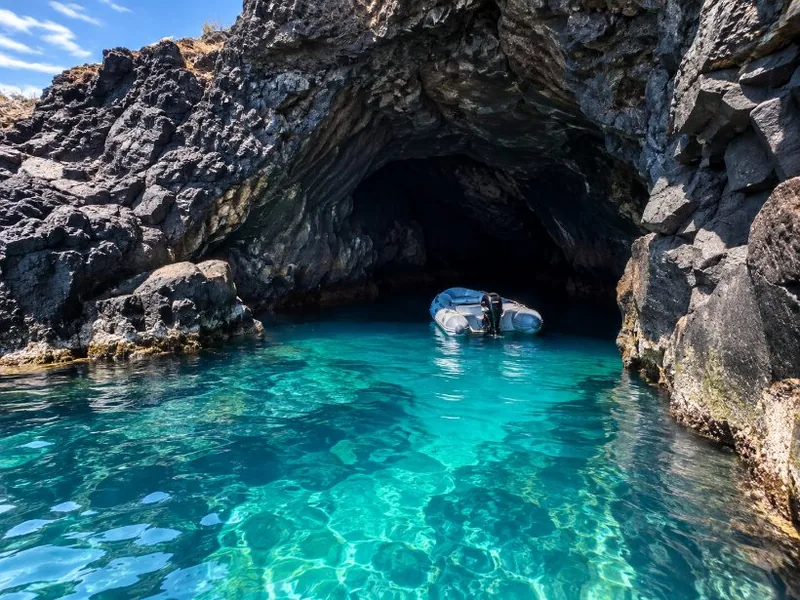
See more than the inner cove: according to its listing, this long raft morning visits up to three Molokini spots, including the back side, plus sea caves and Makena.
Book thisWhat fish will you see at Molokini?
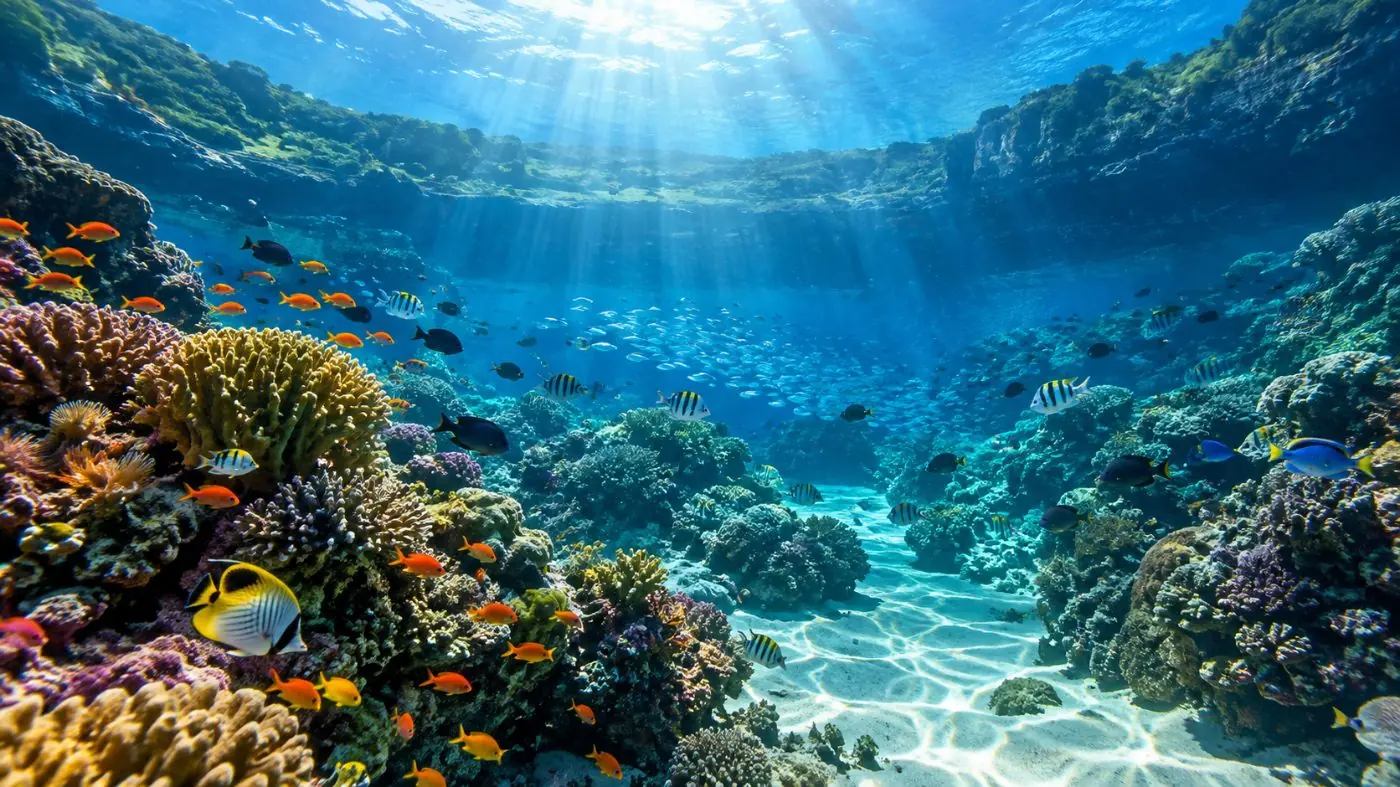
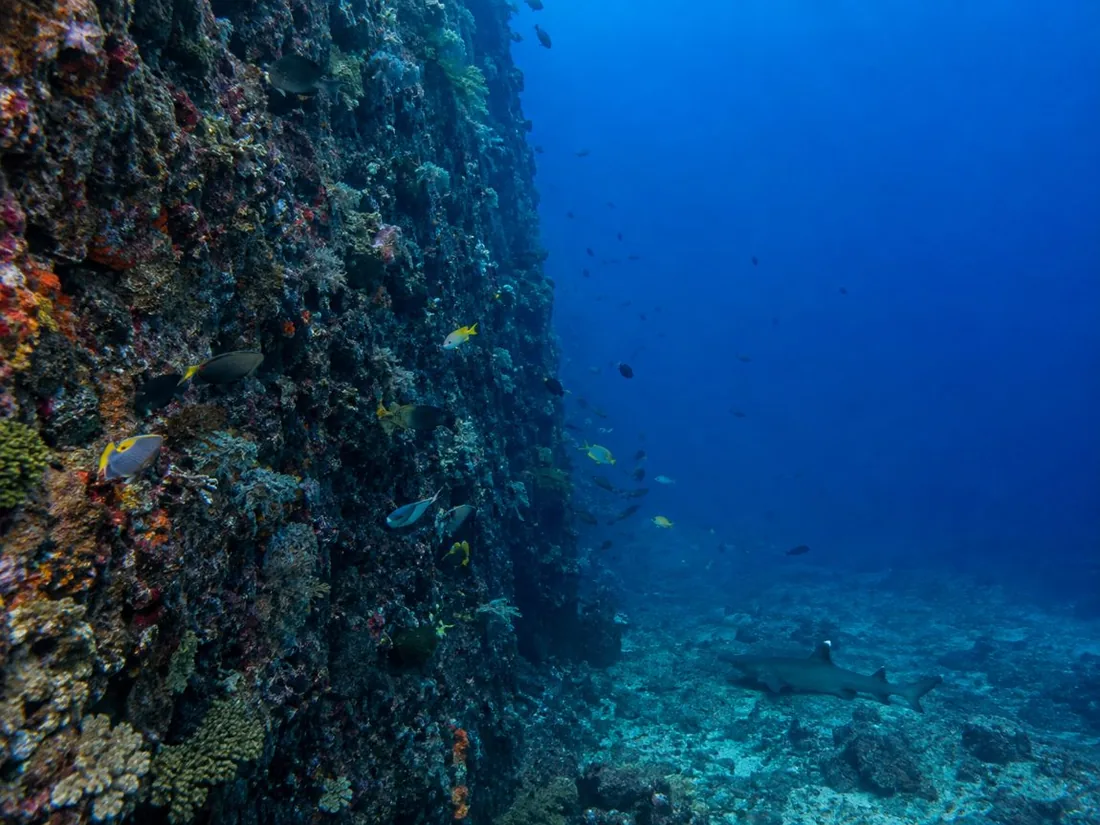
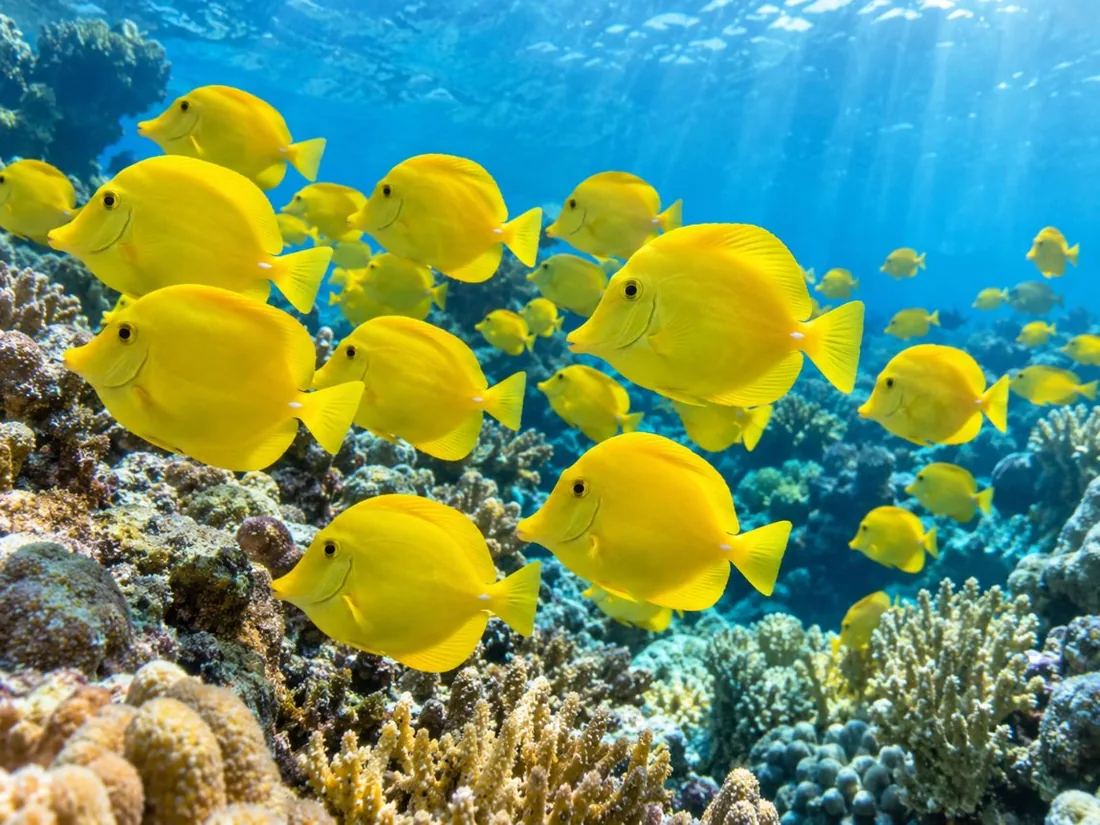
Lots of them. Around 250 fish species and 38 hard coral species are recorded at Molokini, which is why the visibility and the fish are the main event.
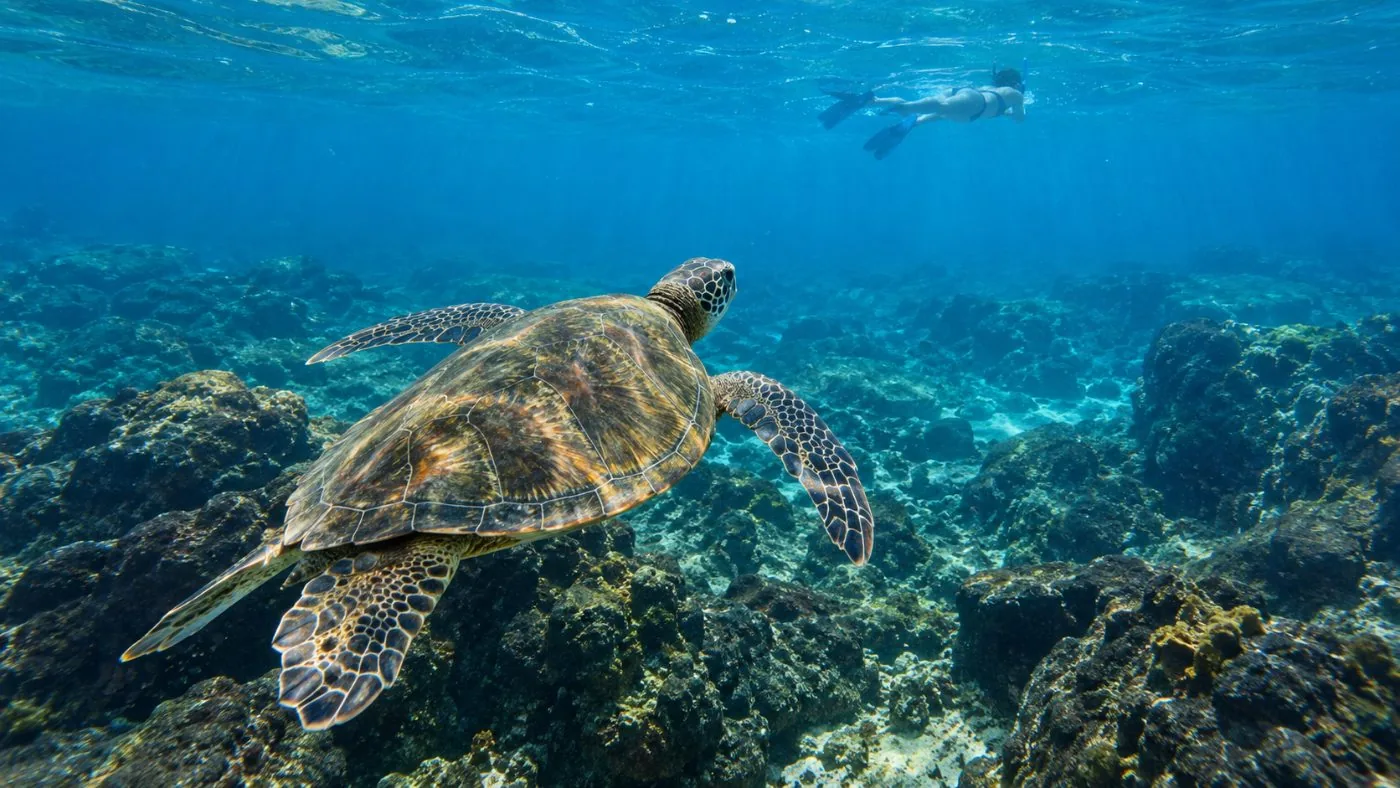
The inner cove has sand and coral heads on the crater floor, and the water is protected from the open channel by the rim, which is part of why visibility is so good. Reef fish gather over the coral heads, often in schools close enough to see clearly from the surface. What you will not often see are green sea turtles: they tend to stay closer to the Maui shore, at the reefs known as Turtle Town. That is why many trips add a second stop there; see Turtle Town or Molokini.
Do you see sharks at Molokini Crater?
Sometimes. Whitetip reef sharks are among the species reported around Molokini, usually resting near the bottom or along the walls.
Snorkelers who see one mostly look down on it from far above. Whitetip reef sharks are not known for bothering people, and the crew briefing covers what to do in the water. If you spot one, enjoy the sighting, keep your distance and let the crew know.
People also ask which month sharks are most active around Maui. This site has no reliable month-by-month figure on that, so it does not give one. For current ocean-safety advice, follow the official state and county guidance, the lifeguards and your crew on the day.
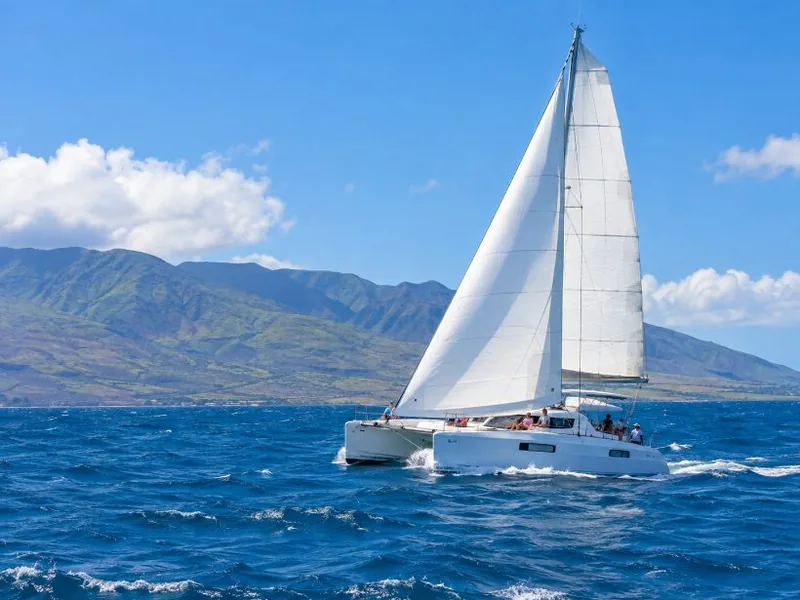
Prefer a calmer, longer day? The performance sail spends one long stop at Molokini, with breakfast and a buffet lunch.
Book thisCan you swim from Maui to Molokini?
No, it is not a swim to attempt. Molokini sits about 3 miles out in an open channel, and access is by boat only.
The state notes currents outside the cove that get stronger with the afternoon winds. Even on a boat trip, the snorkeling happens in the sheltered cove, not in the channel, and the crew decides where and when guests get in. Mornings are calmest, and by mid-morning the cove can hold more than a dozen boats. That is also why most trips run in the morning; see the best time to snorkel Molokini.
Where does the name Molokini come from?
The name is often translated as "many ties", and the best-known story behind the islet is a legend of the goddess Pele.
As the legend is told, Molokini was a woman cut in two, and her head became Pu'u Ola'i on the Maui shore. It is a story, told as one, and part of the place.
The recent history is less poetic: the US Navy used Molokini for target practice during World War II. Today it is protected both as a marine reserve and as a seabird sanctuary.
Frequently asked questions
Does the Molokini Crater have sharks?
Whitetip reef sharks are reported around Molokini and are sometimes seen resting near the bottom or along the walls. Snorkelers usually see them from far above, and the crew briefing covers what to do.
What month are sharks most active in Maui?
This site has no reliable month-by-month figure on shark activity, so it does not offer one. Follow official state and county ocean-safety guidance, the lifeguards and your crew.
Can you walk on Molokini?
No. Molokini is a state seabird sanctuary and landing on the islet is prohibited. You snorkel from a boat moored in the cove.
How far is Molokini from Maui?
About 3 miles off Maui's southwestern coast, and about 2.5 miles west of Makena State Park.
Ready to book
Choose your trip
Free cancellation on every option, and every trip is weather permitting.
Sea Caves, Molokini & Turtle Town
Sea caves, dolphin country and Molokini's back side
Molokini Crater Snorkeling Trip, 2 Hours
Molokini and nothing else, in about two hours
Molokini Snorkel & Performance Sail
- Continental breakfast, buffet lunch and soft drinks
- Snorkel gear and reef-safe sunscreen on board
- Molokini only: one stop, no second site